July - 03 - 2026
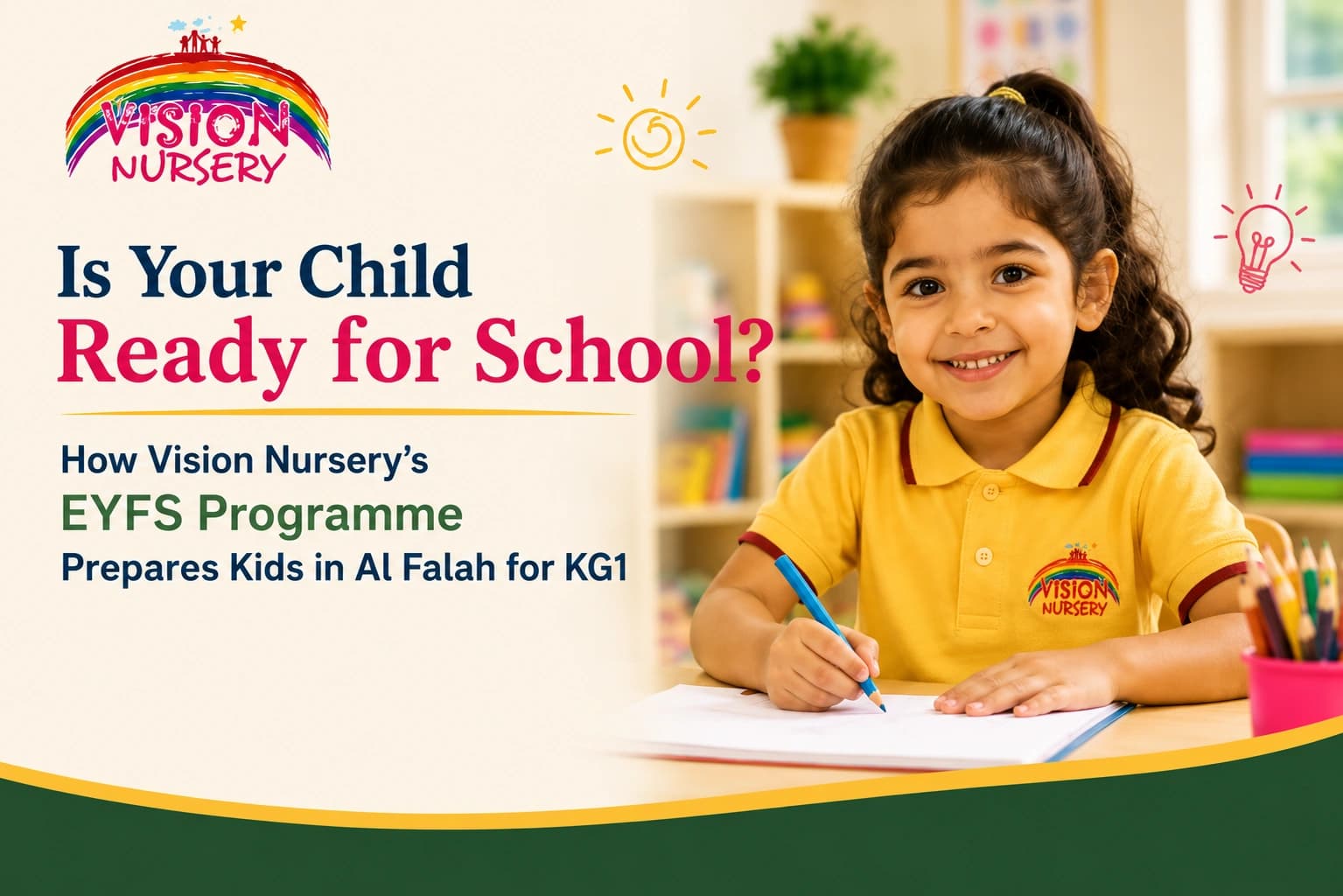
The UAE's new school admission rules have sparked an important conversation among parents.
With the school entry cut-off date shifting from August 31 to December 31 for the 2026-27 academic year, thousands of children born between September and December are now eligible to begin KG1 earlier than before.
For many families, that raises one crucial question:
"Is being eligible the same as being ready?"
The answer is not always yes.
A child's date of birth may determine whether they can start school, but true readiness depends on something much deeper: their social, emotional, physical, and cognitive development.
This is where the Early Years Foundation Stage (EYFS) framework becomes valuable. Widely recognised around the world, EYFS provides a structured way to understand whether a child is genuinely prepared for the transition into formal learning.
In this blog, we explore the five key EYFS milestones that indicate genuine school readiness in Abu Dhabi 2026, and how Vision Nursery's EYFS programme in Al Falah helps children develop each one before they enter KG1.
The UAE recently adjusted its school admission criteria, moving the age cut-off for entry from August 31 to December 31.
Children who previously would have waited another year may now be eligible to begin their educational journey sooner. Under the updated guidelines:
For many parents, the change is welcome. It offers greater flexibility and allows children to join their peers sooner. However, it also introduces a new challenge: understanding whether a younger child is developmentally ready for the expectations of school life.
Families with children born between September and December are experiencing the biggest shift.
Previously, many of these children would have started school the following academic year. Now, parents face an important decision: take advantage of the earlier entry opportunity, or allow additional time for development.
The answer is rarely based on age alone.
Educational authorities recognise that readiness cannot be measured solely by a birth date. Schools are encouraged to consider children's overall development and preparedness for learning environments.
This means that while age eligibility opens the door, developmental readiness determines how comfortably a child walks through it.
But what does a readiness assessment actually look at, and is your child there yet?
The EYFS framework identifies seven interconnected areas of learning and development that support children's growth during the early years. These areas ensure children are not only academically prepared but also emotionally and socially equipped to thrive.
While all seven areas matter, five are especially important when considering KG1 readiness.
This area focuses on confidence, independence, resilience, and relationships. A school-ready child can usually:
Strong communication skills form the foundation of all learning. Children entering KG1 should be able to:
Physical development goes far beyond running and climbing. It includes:
Early literacy begins long before reading books independently. It includes:
Young children develop mathematical understanding through play and exploration:
When these developmental foundations are secure, children typically transition into KG1 with greater confidence and enthusiasm for learning.
Not every nursery structures its day around measurable developmental outcomes. At Vision Nursery, every activity is intentionally designed around EYFS principles, ensuring learning remains engaging, age-appropriate, and purposeful.
Rather than focusing on academic pressure, the programme builds the foundational skills children need to flourish in school.
Outdoor learning plays a vital role in early childhood development. Vision Nursery's bike trail activities encourage:
Age-appropriate play zones ensure children feel secure while interacting with peers at similar developmental stages, helping reduce anxiety and build positive social engagement.
Creative expression is a powerful learning tool. Through painting, drawing, storytelling, singing, and music, children:
The Serenity Garden gives children the space to explore nature while building patience and observation skills. Activities like planting seeds and caring for growing plants introduce:
These are qualities that contribute significantly to school readiness, even if they do not show up on a traditional checklist.
Role play remains one of the most effective ways young children learn. Whether pretending to run a shop, care for a baby, or act as a doctor, children practise:
These interpersonal skills are essential for successful classroom participation, and they develop naturally through play, not pressure.
Through these carefully planned experiences, Vision Nursery's EYFS preschool in Al Falah supports every aspect of KG1 readiness in Abu Dhabi.
Many indicators of readiness are visible at home long before a child enters a classroom. Here are five signs that suggest a child is moving toward a successful school transition.
Some hesitation is completely normal. But children who can settle relatively quickly after a goodbye tend to adapt more comfortably to school routines.
Can your child understand and complete something like: "Put your toys away, wash your hands, and come to the table"? This skill supports both classroom learning and daily independence.
School readiness is not about reading fluently. It is about showing interest in books, recognising symbols, asking questions, and exploring how things work.
Tasks like hand-washing, eating independently, putting on shoes, and using the toilet contribute significantly to confidence and classroom participation.
Children who can share, take turns, negotiate, and play alongside others for sustained periods generally find classroom environments easier to navigate.
If your child is not demonstrating all of these skills yet, that is completely normal. Development is not a race. The right learning environment can help build confidence and close gaps before school begins.
Is your child ticking most of these boxes, or are there areas a structured programme could help strengthen before September?
The new UAE admission rules have expanded opportunities for many families, but eligibility alone does not guarantee readiness.
True school readiness is developmental, not chronological.
The EYFS framework gives parents a clear, evidence-based roadmap for understanding whether their child is genuinely prepared for KG1. When the foundations of communication, confidence, independence, early literacy, and mathematics are secure, children do not just start school. They thrive in it.
At Vision Nursery, every part of the day is intentionally designed around these milestones, so children arrive at KG1 ready, not just eligible.
Every child reaches readiness at their own pace. With the right environment and support, that journey becomes far more confident and enjoyable.
Visit our Al Falah or MBZ City campus today, or connect with us through our contact page to learn more about how we support your child's first steps toward school success.
Finding the Best Preschool in Al Falah, Abu Dhabi: A Parent's Complete Guide to Choosing an EYFS Nursery
Aug - 19 - 2026
Learning Through Play: How Vision Nursery’s Outdoor Spaces Build Essential Early Childhood Skills
July - 24 - 2026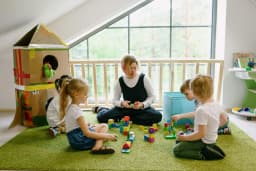
7 Questions Smart Abu Dhabi Parents Ask Before Choosing a Nursery
June - 18 - 2026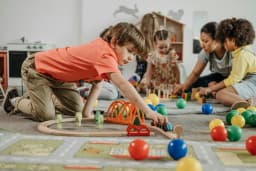
Not All Nurseries Feel the Same: Choosing a Villa Based EYFS in Abu Dhabi
June - 4 - 2026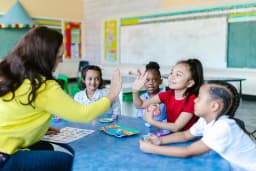
The Hidden Reason Children Settle Faster In Villa-Based Nurseries
May - 20 - 2026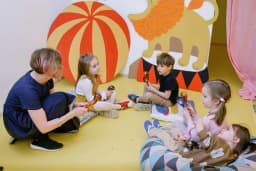
What Are the 7 Areas of Learning in EYFS
May - 14 - 2026Vision Nursery © COPYRIGHT 2024. All Rights Reserved
Designed By CODE PUBLICIST