Jan - 19 - 2026
Early childhood education is where lifelong learning truly begins. The experiences children have between the ages of three and six shape how they read, think, reason, and solve problems for years to come. In Abu Dhabi, kindergarten education has evolved into a carefully designed foundation stage that goes far beyond basic childcare. It is structured, intentional, and deeply focused on building early literacy and numeracy skills in ways that feel natural, engaging, and meaningful to young learners.
Let’s explore how kindergarten education in Abu Dhabi creates strong readers, confident problem-solvers, and curious thinkers—right from the very beginning.
Research consistently shows that children who develop strong literacy and numeracy skills in their early years are more likely to succeed academically, socially, and emotionally later in life.
These foundational skills support:
Kindergarten schools in Abu Dhabi have an education framework that recognises this critical window of development and places early learning at the heart of its long-term education vision.
One of the defining features of kindergarten education in Abu Dhabi is its play-based and experiential approach. Rather than relying on rote memorisation or worksheets, learning is woven into play, stories, conversations, music, and hands-on exploration.
This approach works because young children learn best when they are actively involved. Through guided play, children naturally develop language, number sense, and cognitive skills without the pressure of formal instruction.
For example:
Learning feels enjoyable, not forced—and that makes all the difference.
Early literacy is not just about teaching children to read words. It begins much earlier, with building the skills that make reading possible.
Kindergarten classrooms are designed to immerse children in language. Labels, picture cards, word walls, and visual cues surround them, helping children associate spoken words with written symbols.
Teachers consistently model language by:
This constant exposure strengthens listening, speaking, and comprehension skills.
Storytime is a cornerstone of daily routines. Through repeated exposure to books, children learn how stories work—characters, sequencing, cause and effect, and emotions.
Teachers use shared reading techniques such as:
These interactions build early reading comprehension long before children read independently.
Rather than formal reading drills, phonics is introduced gently through songs, rhymes, and games. Children learn to recognise sounds, identify rhyming words, and connect letters to sounds naturally.
This phonemic awareness forms the backbone of future reading success.
Just like literacy, numeracy in kindergarten is about more than numbers on a page. It’s about understanding quantities, patterns, and relationships.
Children encounter numbers throughout the day—during snack time, outdoor play, and classroom routines. Counting toys, sorting objects, and comparing sizes become opportunities to practise numeracy in real contexts.
This practical exposure helps children understand what numbers actually mean, not just how to recite them.
Puzzles, construction games, and sorting activities encourage logical thinking and reasoning. Children learn to recognise patterns, make predictions, and test solutions—key numeracy skills that extend into mathematics later on.
Mistakes are treated as part of learning, helping children build resilience and confidence.
Children explore shapes, lengths, weights, and patterns using hands-on materials. Whether they’re arranging blocks, measuring sand, or identifying shapes in their surroundings, these activities lay the groundwork for mathematical thinking.
Behind every effective kindergarten classroom is a skilled teacher who understands child development. In Abu Dhabi, early-years educators are trained to observe, guide, and support each child’s individual learning journey.
Teachers:
This personalised approach ensures that no child is rushed—and no child is left behind.
Parents play a powerful role in strengthening early literacy and numeracy beyond the classroom. With a few simple, everyday habits, learning can become a natural part of home life.
Read together daily and choose stories your child enjoys. Pause to talk about the characters, pictures, and what might happen next.
Count fruits while shopping, steps on the staircase, toys during clean-up, or plates at mealtimes to build number sense naturally.
Singing nursery rhymes and action songs helps children recognise sounds, build vocabulary, and remember patterns with ease.
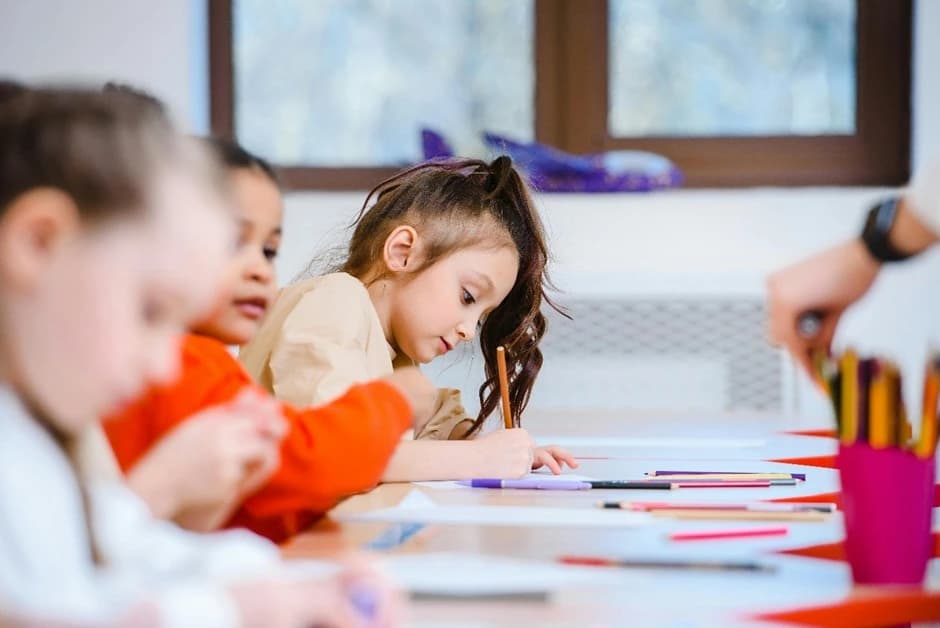
Offer crayons, paper, and alphabet toys so your child can explore letters, shapes, and creative expression freely.
Board games, puzzles, and simple card games introduce counting, turn-taking, problem-solving, and language skills in a fun, pressure-free way.
Abu Dhabi’s classrooms are wonderfully diverse, bringing together children from many cultural and linguistic backgrounds. This diversity becomes a powerful learning tool.
Children are exposed to:
This environment strengthens communication skills, empathy, and adaptability—while reinforcing literacy through meaningful social interaction.
Kindergarten education in Abu Dhabi actively involves parents in the learning process. Schools encourage families to reinforce literacy and numeracy at home through simple, everyday activities.
Parents are guided to:
This home-school partnership creates continuity and reinforces learning beyond the classroom.
One of the biggest strengths of kindergarten education in Abu Dhabi is how well it prepares children for primary school—academically, socially, and emotionally.
By the time children move forward, they typically have:
This smooth transition reduces anxiety and sets children up for long-term success.
For families choosing a Kindergarten in Abu Dhabi, the emphasis on holistic development is a major draw. Parents increasingly recognise that early education is not about academic pressure—it’s about building the right foundations.
Similarly, many Kindergarten schools are known for balancing structure with creativity, ensuring children develop essential skills while still enjoying childhood.
This balance is what makes early learning effective and sustainable.
Bottom Line
Kindergarten schools in Abu Dhabi are thoughtfully designed to nurture early literacy and numeracy through play, interaction, and meaningful experiences. By focusing on how children learn—not just what they learn—these programmes create confident, capable learners ready to take on future academic challenges.
More importantly, they instil a love for learning that lasts well beyond the kindergarten years. In a rapidly changing world, that may be the most valuable outcome of all.
The Hidden Reason Children Settle Faster In Villa-Based Nurseries
May - 20 - 2026
What Are the 7 Areas of Learning in EYFS
May - 14 - 2026
Looking for the Best Nursery Near Al Falah St, Abu Dhabi: Here’s What to Consider
April - 17 - 2026
How to Choose the Best EYFS Preschool in Abu Dhabi
March - 13 - 2026
Why Choose a British Curriculum Nursery in Abu Dhabi: A Parent’s Guide
March - 5 - 2026
How a Holiday Preschool Supports Learning and Fun During School Breaks
Feb - 24 - 2026Vision Nursery © COPYRIGHT 2024. All Rights Reserved
Designed By CODE PUBLICIST