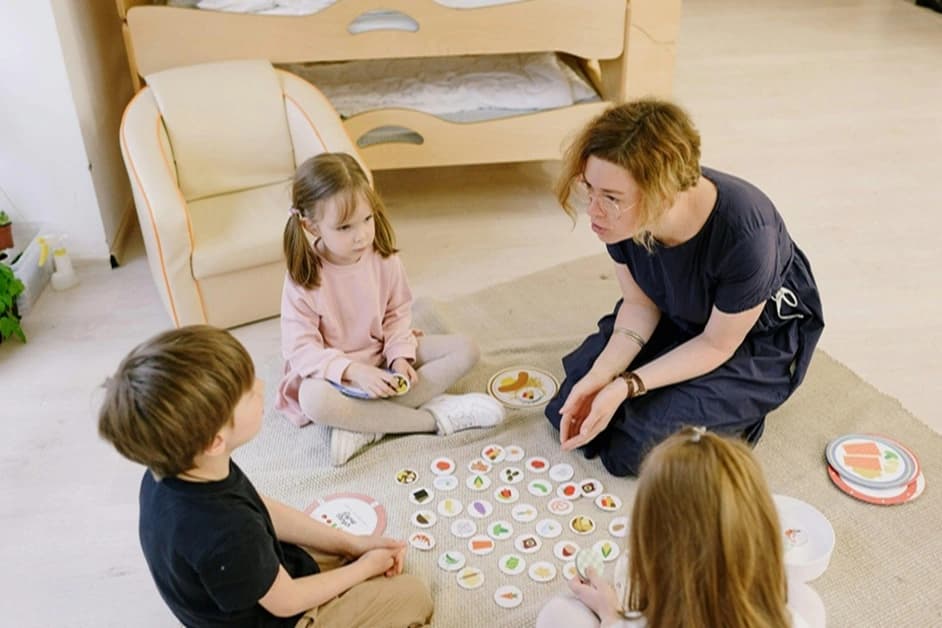
Jan - 21 - 2026
The early years of a child’s life are not just about learning colours, numbers, or the alphabet. They are about learning how to learn, how to interact with the world, and how to see oneself as capable and confident. This is where the Early Years Foundation Stage (EYFS) framework plays a transformative role. Designed to support holistic development from birth to age five, EYFS focuses on nurturing independence, emotional security, and self-belief from the very beginning.
In today’s fast-changing world, parents and educators increasingly recognise that academic success alone is not enough. Children need resilience, autonomy, and confidence to thrive—qualities that begin forming long before formal schooling starts. EYFS is intentionally structured to embed these traits into everyday nursery experiences, making independence and confidence natural outcomes rather than forced expectations.
EYFS is built around the idea that young children learn best through play, exploration, and positive relationships. Rather than imposing rigid academic targets, the framework prioritises developmental milestones that support emotional, social, physical, and cognitive growth.
At its core, EYFS encourages children to:
These principles are not taught through instruction alone; they are woven into daily routines, classroom environments, and teacher-child interactions.
For a child to act independently, they must first feel safe. EYFS places strong emphasis on building secure relationships between children and educators. When children feel understood, respected, and supported, they are more willing to explore and take initiative.
In a well-structured EYFS setting, educators:
This balance between guidance and freedom helps children develop confidence in their abilities while knowing support is always available when needed.
A defining feature of EYFS is the thoughtfully designed learning environment. Classrooms are set up to invite exploration, decision-making, and self-directed activity. Children are not constantly told what to do; instead, they are encouraged to choose activities that interest them.
This approach is widely adopted in high-quality early years settings, including many parents searching for the best nursery in Abu Dhabi, where EYFS-aligned environments are designed to foster autonomy from the earliest stages.
Simple practices make a powerful difference:
Through these daily choices, children begin to see themselves as capable decision-makers.
EYFS recognises play as a serious and essential form of learning. Through play, children test ideas, take risks, and experience success and failure in a safe, low-pressure environment.
Play-based learning supports confidence by:
When a child builds a structure that collapses or struggles to complete a puzzle, they learn resilience. Educators trained in EYFS understand when to step back and when to gently scaffold learning, ensuring that confidence grows organically.
Independence in EYFS is not limited to learning activities—it extends to daily routines. Simple tasks such as tidying up, managing personal belongings, or preparing for snack time are powerful confidence-builders.
EYFS encourages children to:
These routines may seem small, but they send a strong message: You are capable. Over time, children internalise this belief, carrying it into academic and social situations.
Confidence is closely linked to communication. EYFS places strong emphasis on developing language and communication skills, enabling children to express needs, ideas, and emotions effectively.
Through storytelling, role play, songs, and conversations, children learn to:
Educators model respectful listening and positive feedback, reinforcing that every voice matters. This early encouragement plays a critical role in building self-esteem and social confidence.
EYFS environments are inherently social. Children learn to share, negotiate, collaborate, and resolve conflicts—all essential life skills.
Rather than enforcing compliance, EYFS educators guide children to:
These experiences help children develop emotional intelligence, which directly supports confidence. A child who can navigate social situations successfully feels more secure and self-assured.
In EYFS, educators are facilitators rather than instructors. Their role is to observe, support, and extend learning—not to dominate it. This approach allows children to remain at the centre of their own development.
Skilled EYFS practitioners:
This teaching style reinforces intrinsic motivation and helps children develop confidence rooted in self-belief rather than external validation.
In diverse communities, early years education must be inclusive and culturally responsive. EYFS supports this by valuing each child’s background, language, and identity.
In a multicultural city like Abu Dhabi, an EYFS-aligned nursery often reflects this diversity through inclusive materials, multilingual exposure, and culturally respectful practices. When children see their identities acknowledged and valued, their sense of confidence and belonging grows stronger.
One of the greatest strengths of EYFS is that it prepares children not just for the next stage of schooling, but for life beyond the classroom.
Independence and confidence developed during the nursery years translate into:
Children who believe in their abilities approach new challenges with curiosity rather than fear—a mindset that supports lifelong success.
Bottom Line
EYFS builds independence and confidence not through pressure or early academic demands, but through trust, choice, play, and meaningful relationships. By respecting each child’s pace and individuality, the framework lays a strong foundation for emotional security and self-belief.
For parents seeking environments that prioritise holistic development, EYFS-aligned settings stand out for their child-centred philosophy. Whether evaluating the best nursery in Abu Dhabi or exploring early years options elsewhere, understanding how EYFS nurtures independence and confidence can help families make informed, future-focused decisions for their children’s earliest learning journey.
7 Questions Smart Abu Dhabi Parents Ask Before Choosing a Nursery
June - 18 - 2026
Not All Nurseries Feel the Same: Choosing a Villa Based EYFS in Abu Dhabi
June - 4 - 2026
The Hidden Reason Children Settle Faster In Villa-Based Nurseries
May - 20 - 2026
What Are the 7 Areas of Learning in EYFS
May - 14 - 2026
Looking for the Best Nursery Near Al Falah St, Abu Dhabi: Here’s What to Consider
April - 17 - 2026
How to Choose the Best EYFS Preschool in Abu Dhabi
March - 13 - 2026Vision Nursery © COPYRIGHT 2024. All Rights Reserved
Designed By CODE PUBLICIST